

香港商業大廈空中花園的樹種組成、生長空間和管理
在空中花園中,棕櫚樹(Palm trees)和木本樹(Woody trees)在受到限制的地上和地下生長空間下表現不同

Title: Tree species composition, growing space and management in Hong Kong’s commercial sky gardens
Urban Forestry & Urban Greening 64, 2021, 127267
Author(s): Caroline M.Y. Law, L.C Hui, C.Y Jim, T.L Ma
https://www.sciencedirect.com/science/article/pii/S1618866721002946
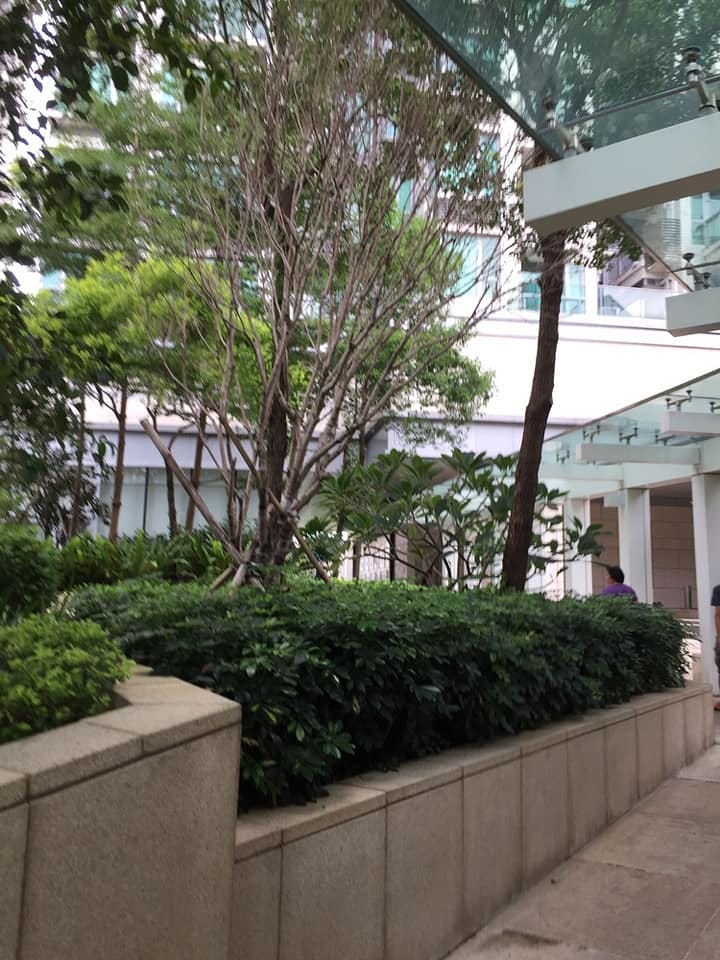
本研究是有關香港商業大廈空中花園樹種組成、生長空間和管理的研究。研究調查了15個商業建築物的空中花園,共480棵樹,並比較了較舊的空中花園(於2007年或之前完成)與較新的空中花園(2007年之後)。該研究評估了樹種多樣性、種植空間設計、管理實踐及其與樹木健康的關係。
主要發現包括:
舊空中花園與新空中花園之間的樹種組成差異。較舊的場地有更多的棕櫚樹,而較新的花園則顯示出對觀賞價值高且形狀緊湊的闊葉樹和針葉樹的採用增加。然而,較新的場地本土樹種(native tree species)較少,樹種多樣性也較低。研究還揭示,樹木經常被密集種植,特別是在較新的空中花園中,這導致了管理問題。常見的修剪做法如頂端修剪,顯示出樹種選擇不良和管理不善。發現種植槽的生長空間不足會對樹木健康產生負面影響。
在空中花園中,棕櫚樹(Palm trees)和木本樹(Woody trees)在受到限制的地上和地下生長空間下表現不同:
種植槽類型:
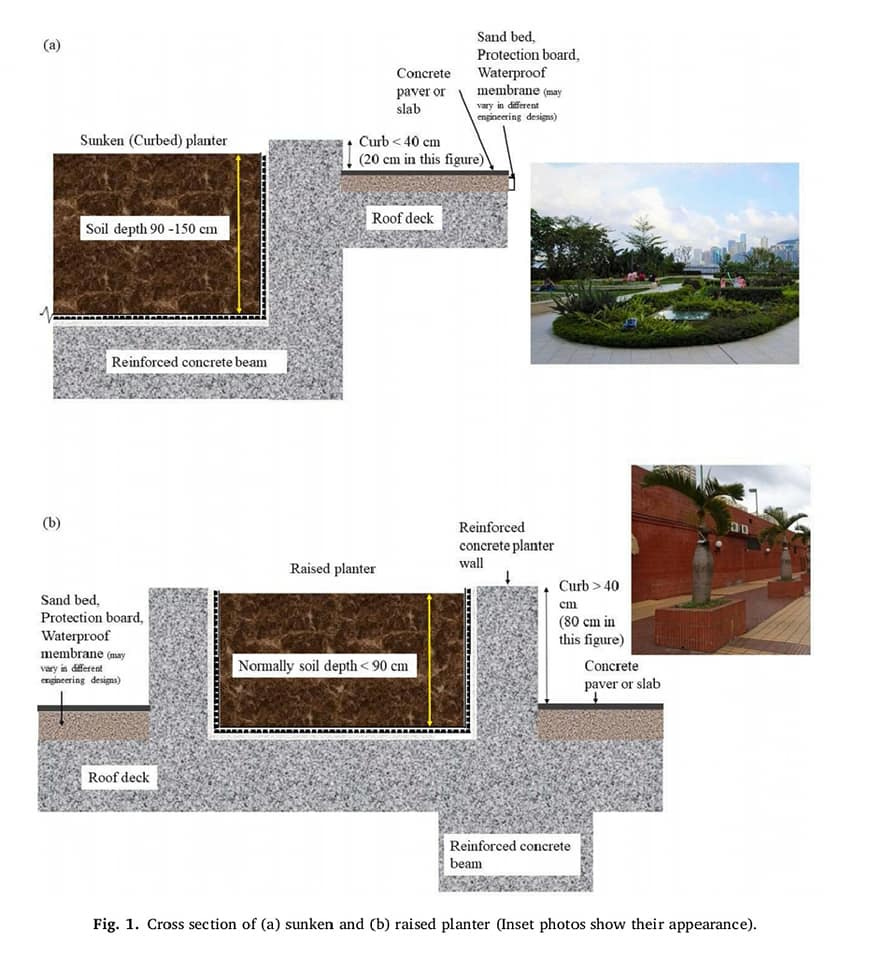
棕櫚樹在高身種植槽(raised planter)中通常表現較好,而木本樹則在凹陷種植槽(sunken planter)中表現更佳。這可能是由於棕櫚樹的根系大小和擴展受到有限土壤的約束較小,而木本樹則得益於凹陷種植槽中較大的土壤體積和更好的濕度保持。
生長空間限制:
與棕櫚樹相比,木本樹受到有限生長空間的影響更大。樹木冠幅重疊較大的情況下,棕櫚樹和木本樹的健康狀況均較差。然而,木本樹對根系生長障礙和冠層障礙似乎更敏感。種植距離:
對於棕櫚樹,舊空中花園的棕櫚樹木之間距通常較新空中花園為疏。舊空中花園中的木本樹有更高比例的樹木種植得非常靠近(< 1米),但中距離(< 3米)的比例較低。修剪需求:
木本樹需要更頻繁和密集的修剪,包括頂端修剪,以控制其在有限空間中的大小。棕櫚樹則不需要頂端修剪。整體適應性:
棕櫚樹在空中花園的受限生長空間中似乎更具適應性,這可能與它們的生長形態和較有限的根系有關。
空中花園內的頻繁樹木頂端修剪在顯示了什麼?
這表明了管理者正積極控制樹木的大小,希望維持可管理的樹高,以減低樹木倒塌風險。但這可能會導致長期的結構問題和增加管理成本。
研究揭示了幾個獨特且有趣的發現:
(1)儘管香港政府最近推廣增加城市生物多樣性,但較新的空中花園本土樹種較舊的花園少,這表明私人部門偏離了公共綠化政策。
(2)榕屬樹種 (Ficus spp.)是頻繁選種於空中花園的品種,儘管它們能耐受惡劣條件,且具有高生態價值,但由於龐大的成熟尺寸及其廣泛而生長迅速的根系,對空中花園的防水層和結構穩定構成長遠風險。
(3)另一個有趣的發現是: 與預期相反,位於較高空的空中花園的樹木並不一定顯示出較差的健康狀況,這表明其他因素可能對這些環境中的樹木健康有更重要的影響。
This study presents a study on tree species composition, growing space, and management in Hong Kong's commercial sky gardens. The research investigated 15 commercial sky gardens with 480 trees, comparing older sites (completed in or before 2007) with newer ones (after 2007). The study evaluated species diversity, planting space design, management practices, and their relationships with tree health.
Key findings include differences in species composition between old and new sky gardens. Older sites had more palm trees, while newer gardens showed increased adoption of broadleaf and conifer species with high ornamental value and compact form. However, newer sites had fewer native tree species and lower species diversity. The study also revealed that trees were often densely planted, particularly in newer sky gardens, leading to management issues. Common practices like topping indicated poor species selection and mismanagement. Planter types with insufficient growing space were found to negatively impact tree health.
Palm trees and woody trees perform differently under constrained above and underground growing spaces in sky gardens:
1. Planter type:
Palm trees generally perform better in raised planters, while woody trees do better in sunken planters. This is likely due to palms' limited root size and spread being less confined by inadequate soil, while woody trees benefit from the larger soil volume and better moisture retention in sunken planters.
2. Growing space constraints:
Woody trees are more affected by limited growing space compared to palms. Trees with large canopy overlap showed poorer health for both palms and woody trees. However, woody trees appeared more sensitive to root-growth obstacles and crown barriers.
3. Planting distance:
For palms, old sites had larger distances between neighboring trees compared to new sites. Woody trees in old sites had a higher proportion planted very close together (< 1m apart), but also a lower proportion at medium distances (< 3m apart).
4. Pruning needs:
Woody trees required more frequent and intensive pruning, including topping, to control their size in confined spaces. Palms did not require topping.
5. Overall adaptability:
Palms generally seemed more adaptable to the constrained growing spaces in sky gardens, likely due to their growth form and more limited root system.
What does the high incidence of tree topping indicate about the management practices in sky gardens?
The high incidence of tree topping in sky gardens indicates that managers are actively trying to control tree size to minimize the risk of failure. This practice reflects a determination to maintain manageable tree heights despite the challenges posed by physical constraints in these environments. It suggests a proactive approach to tree management, albeit one that may lead to long-term structural issues and increased management costs.
This research uncovered several unique and interesting insights. Despite recent promotion by local authorities to increase urban biodiversity, newer sky gardens had fewer native species than older ones, indicating a departure from public landscaping policies in the private sector. The study also highlighted the frequent use of Ficus species, which, despite their tolerance to harsh conditions and high ecological value, pose risks in sky gardens due to their extensive root systems and large final dimensions. Another intriguing finding was that, contrary to expectations, trees at higher elevations did not necessarily show poorer health, suggesting that other factors may have more critical influences on tree health in these environments.